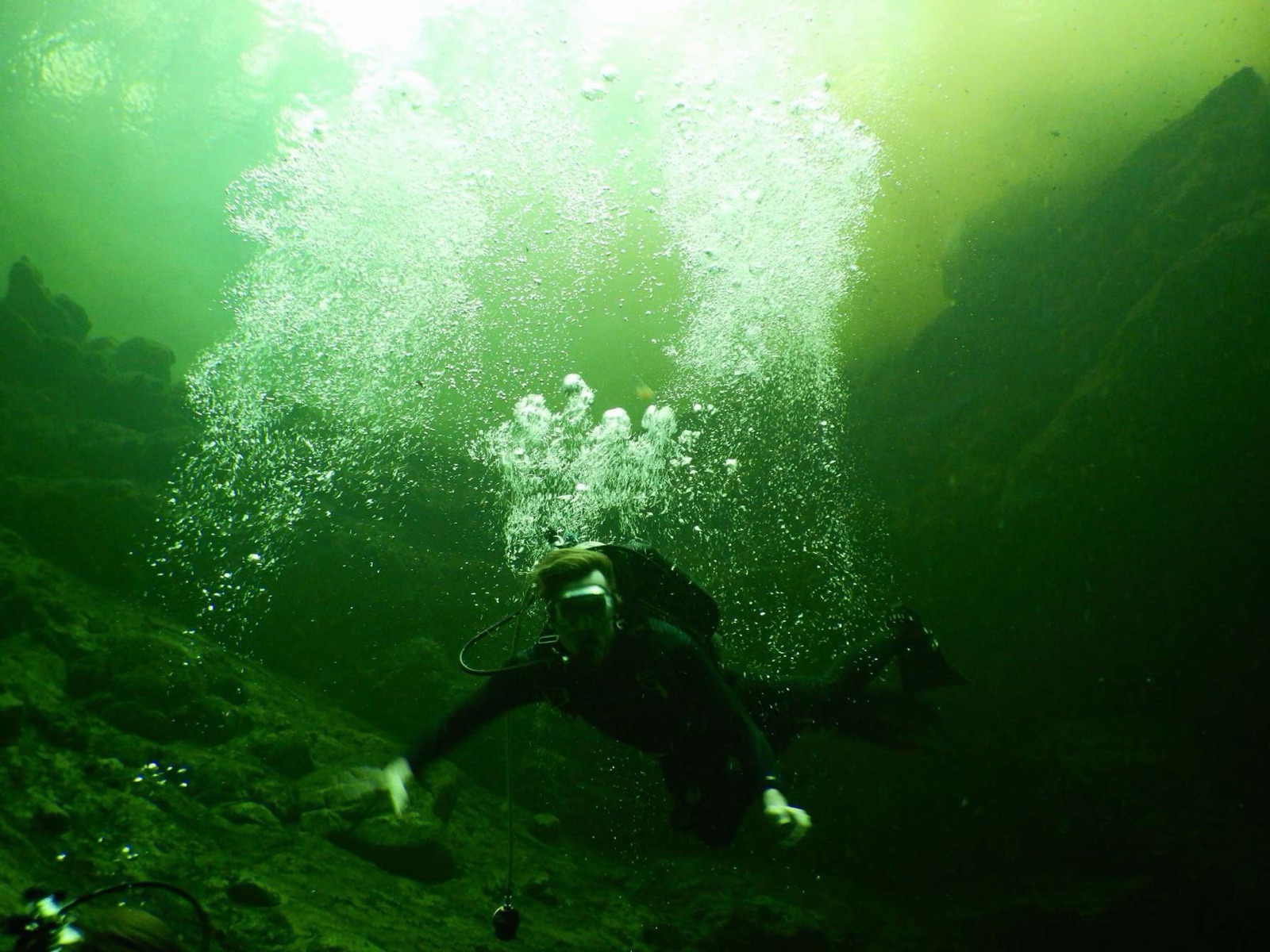
From 2020 to 2023 I was a divemaster and teaching assistant for the University of Florida's Scientific Diving Program. I'm an SDI Divemaster, and that work meant helping more than 30 students move through courses from Open Water up to Master Diver.
What the job involved
Most of it happened in three places: in the water, running skills and keeping an eye on students; out of the water, helping with gear and checks; and in the classroom, supporting lectures on dive planning, dive physics and physiology. The classroom part matters more than people expect. Understanding why pressure, gas and depth behave the way they do is what makes the in-water skills stick.
Florida's springs
Almost all of my diving has been in Florida karst: freshwater springs and cavern systems that are cold, clear and, in places, overhead. It's its own discipline, nothing like reef diving, and cavern areas call for proper training and conservative planning. Sites in my log include Devil's Den and Blue Grotto in Williston, Ginnie Springs in High Springs, Troy Spring and Royal Spring along the Suwannee, Hudson Grotto, and my favorite, Paradise Spring near Ocala. The one saltwater outlier so far is the kelp forest off Catalina Island.
What teaching taught me
- Calm is contagious. Students take their cue from whoever is leading, especially when something goes slightly wrong.
- Simple instructions win. Underwater you can't explain much, so the briefing on land has to do the work.
- Checks are a habit, not a step. The best divers I worked with never skipped them, no matter how routine the dive.
Next on the dive list: the Silfra fissure in Iceland, a manta ray night dive in Kona and the Great Blue Hole in Belize. The full log is in my field notes.